
Choosing between Shopify and WooCommerce comes down to one tradeoff: ease or control.
Both are strong e-commerce options, and both can help you grow. But they don’t ask the same things from you. Shopify keeps more work off your plate. WooCommerce gives you more freedom, but you handle more moving parts.
Once you see that split clearly, the right choice gets much easier.
What Shopify and WooCommerce actually are
Shopify is a hosted e-commerce platform. You pay a monthly fee, sign in, pick a theme, add products, and start selling. Hosting, security, updates, and core performance are built in, so you don’t need to manage much behind the scenes.
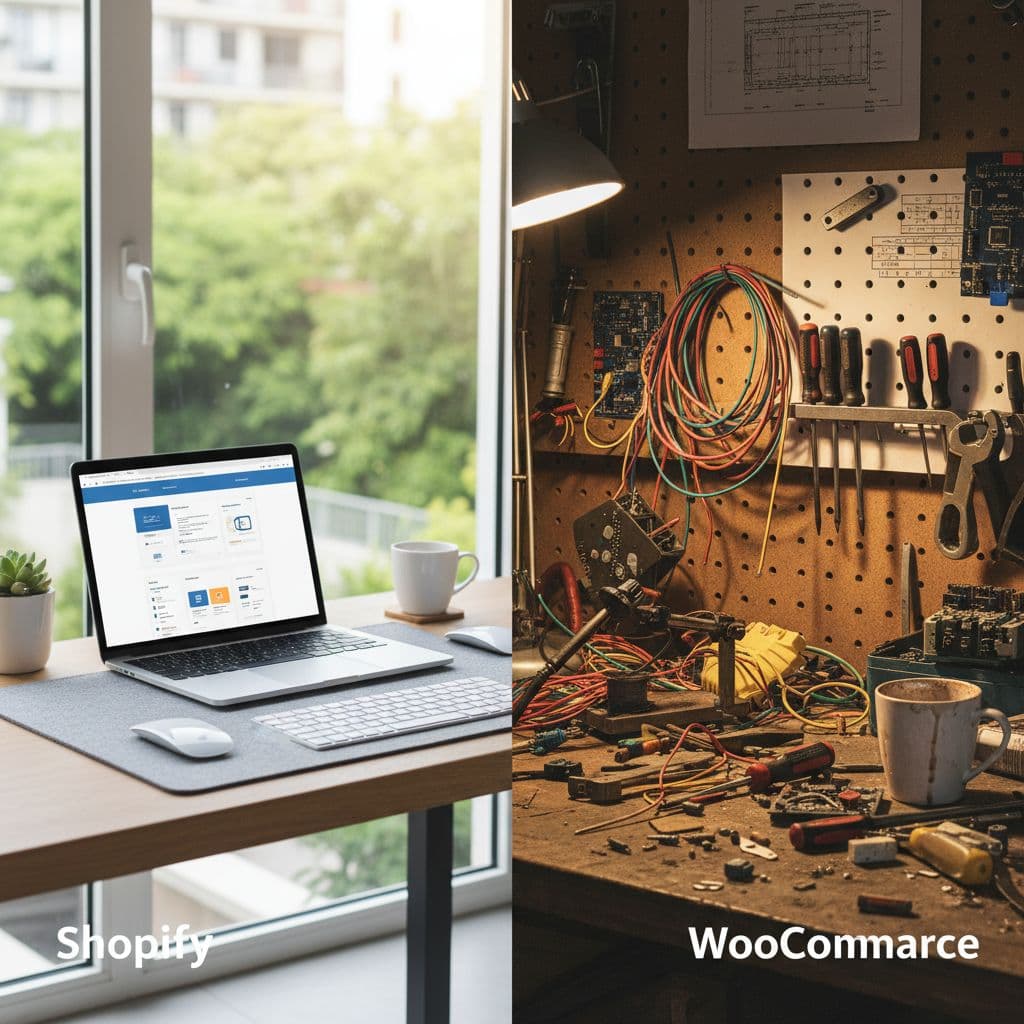
WooCommerce works differently. It’s a WordPress plugin that turns a WordPress site into an online store. That means you choose your own hosting, manage updates, and decide which plugins to add. You get more control, but you also get more responsibility.
That split still shapes the market in 2026. Recent tracking shows WooCommerce ahead by store count, while Shopify often performs better with larger, faster-growing stores. The exact share varies by source, but the pattern stays the same: WooCommerce is broader, Shopify is more polished out of the box.
Shopify vs WooCommerce: the biggest differences that matter
For most business owners, the best comparison is simple: AreaShopifyWooCommerceSetupFast and beginner-friendlySlower, more hands-onMonthly costsClear, predictableFlexible, but harder to forecastMaintenanceIncludedYour job, or your developer’sCustomizationGood, within guardrailsMuch deeper freedomContent and SEOSolid basicsStronger with WordPress content tools
The table points to the same idea throughout this article. Shopify is easier to live with. WooCommerce is easier to shape.
How easy each platform is to set up and manage
Shopify usually wins the launch race. You can set up products, payments, shipping, and a decent-looking theme in a day. Daily tasks also feel simple, because the dashboard is built for store owners first.
WooCommerce takes more effort. First, you need WordPress hosting. Then you install WordPress, add WooCommerce, choose a theme, and connect the right plugins. None of that is impossible, but it does take more time and more judgment.
That gap continues after launch. Shopify handles updates and security for you. With WooCommerce, you need to watch plugin conflicts, backups, and site speed.
What you will really spend each month
Shopify’s pricing is easier to understand because the monthly plan covers the store itself. You may still pay for premium apps, paid themes, or transaction fees, but the bill is usually more predictable.
WooCommerce can look cheaper at first. The plugin is free, and some stores run well on modest hosting. Still, your real cost depends on hosting quality, premium plugins, backup tools, security tools, and sometimes developer help. A recent Metorik comparison makes this point well: Shopify often costs more upfront, while WooCommerce can become harder to price as your store gets more complex.
If you hate surprise expenses, Shopify has the edge.
How much control you get over design and features
WooCommerce wins on freedom. Because it runs on WordPress, you can change more of the store’s structure, design, checkout flow, and content setup. That’s helpful if you need custom product logic, unusual bundles, gated content, or a store that works like part catalog and part media site.
Shopify gives you a more controlled system. That’s a strength for many businesses because fewer choices often mean fewer mistakes. Still, if you want to rework every corner of the experience, Shopify can feel boxed in.
SEO, blogging, and content marketing strength
WooCommerce has a real advantage here because WordPress is still the stronger content platform. If your growth plan depends on long-form blogging, landing pages, category content, and technical SEO control, WooCommerce gives you more room.
Shopify still handles the basics well. You can edit titles, meta descriptions, URLs, and product pages without much trouble. For stores that rely more on ads, email, and direct traffic, that’s often enough.
But if content is central to your sales engine, WooCommerce usually feels like the better fit.
Which platform fits your business best
The fastest way to choose is to match the platform to your day-to-day reality, not your wish list.
Choose Shopify if you want speed and less tech stress
Shopify is the better option for new store owners, lean teams, and busy founders. If you want to launch quickly, avoid maintenance work, and get support from one main platform, it makes sense.
It’s also strong for brands that expect to scale but don’t want to manage hosting or security along the way. You trade some freedom for less friction, and many businesses should make that trade.
Choose WooCommerce if you want flexibility and full control
WooCommerce makes more sense if you already use WordPress or care a lot about content. It’s also a better match for stores with unusual needs, because you can shape the site far more than you can on Shopify.
That freedom comes with work. You either need some comfort with WordPress, or a developer who can help when plugins clash or performance slips. That tradeoff shows up often in a Reddit thread from store owners, where many users say Shopify saves time, while WooCommerce gives them the flexibility Shopify can’t.
The final answer: which one is better for your business?
For most businesses, Shopify is the better choice if you care most about speed, simplicity, and low stress. It gets you selling faster, and it removes a lot of technical work that can slow owners down.
WooCommerce is better if you care most about control, deeper customization, and content-driven growth. It asks more from you, but it gives more back if you need that freedom.
Pick Shopify for ease. Pick WooCommerce for flexibility.
Conclusion
There isn’t one universal winner here. There’s only the platform that matches how you work and how you plan to grow.
If you want fewer moving parts, Shopify is usually the smarter call. If you want a store you can shape in almost any direction, WooCommerce is often the better fit. Match the platform to your budget, skills, and growth plan, and you’ll move forward with more confidence.

I am a professional freelancer with hands-on expertise in the freelancing, online business and remote work industry. I’m profoundly passionate about helping individuals and businesses navigate the fast growing digital economy. Through years of experience working online, I’ve gained practical knowledge and valuable insights in remote work, online business and modern freelancing opportunities.